Marlowe raises a $277M seed at $1.15B to run AI inference on AMD and Etched chips
Six-month-old Marlowe raised a $277 million seed round led by Accel to build inference data centers on AMD and Etched chips, with its first site due to go live in December.
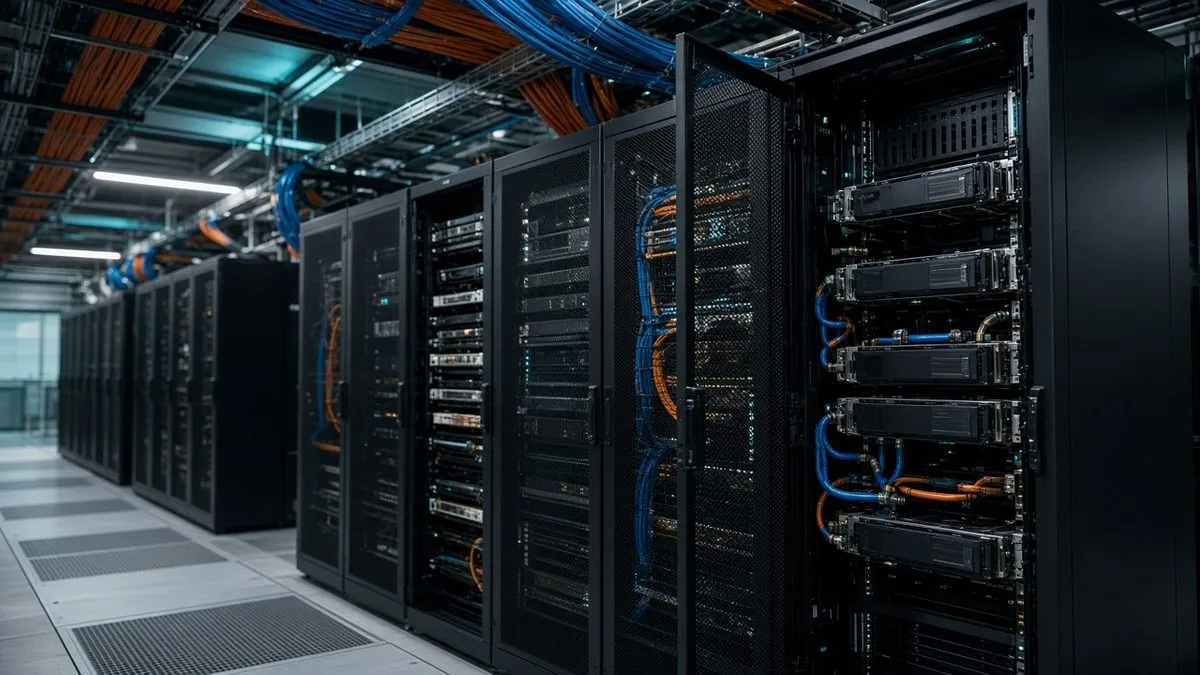
Marlowe, a six-month-old startup that builds and runs data centers for AI inference on chips other than Nvidia's, has raised a $277 million seed round led by Accel. The round values the company at $1.15 billion, according to the company, and the first of its sites is due to go live in December.
The founders are two former Microsoft executives. Chief executive Dan Lewis co-founded the trucking marketplace Convoy and later led enterprise AI product work at Microsoft. Chief technology officer Kutta Srinivasan was a Microsoft corporate vice president and the company-wide technical lead for AI infrastructure, GeekWire reports. Marlowe was founded in May 2026 with Eclipse founder Lior Susan, who is executive chairman, DriveNets chief executive Ido Susan, who sits on the board, and Stanford's Chris Ré as founding advisor.
What Marlowe is building
Marlowe calls its product a "multi-silicon AI factory." The idea is that inference, the work of running trained models inside products, is not one workload but many. In its launch post, the company lists the variables that change from one use to the next: response time, CPU-to-GPU ratio, model size and architecture, the ratio of input to output tokens, security and price sensitivity. It also notes that prefill, where a model reads the prompt, and decode, where it generates the answer, behave like different workloads even within one request. A coding agent refactoring a codebase, a voice assistant that has to answer in under a second and a model summarizing a 500-page filing would each be served by hardware and software tuned for that class of job.
Marlowe says most data centers and inference providers optimize each layer separately, which strands power and leaves compute underused. It plans to co-design the stack for each workload class, from chip selection and facility design through networking, power management and the software that schedules servers and routes tokens. The company says gains of 10% to 20% at each layer add up to two to three times more output per watt and per dollar than conventional GPU clouds. That is a projection for now, since none of its sites is running yet.
Srinivasan described the problem from the buyer's side. At the big tech companies where he worked, non-Nvidia chips were a small share of the fleet, and engineers focused on getting new models running on Nvidia hardware first. "There were literally times when a significant portion of our non-Nvidia fleet was either idle or grossly underused or didn't support the latest models and workloads," he told GeekWire.
Etched first, then AMD
Marlowe is starting with chips from AMD and the startup Etched, and it uses Broadcom networking hardware, Bloomberg reported, as summarized by Quartz. It is not using Nvidia chips for now but has not ruled them out. The first site, built around Etched's chips, is scheduled to go live in December and will mainly serve a large AI coding company, the founders told GeekWire. A second, larger site using AMD's new Helios systems is on track for the second quarter of 2027. Both sites are under contract, a third is under a letter of intent, and the company says it has signed three customer agreements. It has not named the customers or the locations.
Both chipmakers are quoted in the launch post. Vamsi Boppana, AMD's senior vice president of AI, said AMD is "excited to deploy our new Helios system" with Marlowe next year. Etched co-founder and president Rob Wachen said the two companies expect to "deploy our first inference clusters together this year."
Lewis argues the chip is only part of the job. "You can't just take a new chip that comes out and plug it in and expect it to produce tokens," he told GeekWire. "You have to go do the work."
Who is paying, and how far $277 million goes
The $277 million includes a smaller initial round led by Eclipse, Lewis said. Alongside Accel, the company names Bessemer, Altimeter, Atreides, Eclipse, Journey, Valor, Scribble, Emergence Capital, Ritual, Pitango, Neo, Village Global and Banter. Its angel list includes Box chief executive Aaron Levie, Uber chief executive Dara Khosrowshahi, KKR co-founder Henry Kravis and former LinkedIn chief executive Ryan Roslansky. Bloomberg also reported participation from an investing entity tied to Stripe's founders, according to Quartz.
By AI infrastructure standards the round is modest. Much of it will go to chips, networking gear and the support needed to run the sites, plus hiring. Rather than building giant campuses, Lewis said Marlowe plans to prove its approach at sites of tens of megawatts and then finance more capacity site by site. The company is based in Bellevue, Washington, and Redwood City, California, and has close to 30 employees.
It is entering a crowded lane. Gimlet Labs, which raised $300 million at a $3 billion valuation in September, and General Compute, which raised $100 million in October, are also building inference clouds that run on a mix of chips, GeekWire notes. On the hardware side, inference-chip makers are raising large rounds of their own, including FuriosaAI, which raised $620 million in October. The launch also lands as Nvidia works through a leadership change after Jensen Huang's resignation this month. Marlowe's site lists Together AI, another inference provider, among founding advisor Chris Ré's affiliations.
Lewis has seen outside forces sink a startup before. Convoy reached a $3.8 billion valuation before it shut down in 2023. He told GeekWire that Marlowe will spread its exposure across a mix of long- and short-term contracts and several customers rather than relying on one. The first test is the Etched site, set to go live in December.