US rule makes overseas data centers get a license to rent AI compute to Chinese firms
The Commerce Department's new rule targets remote access to American AI chips through third-country data centers and adds licenses for shipments to Indonesia, Malaysia, Singapore, Thailand and Brazil.
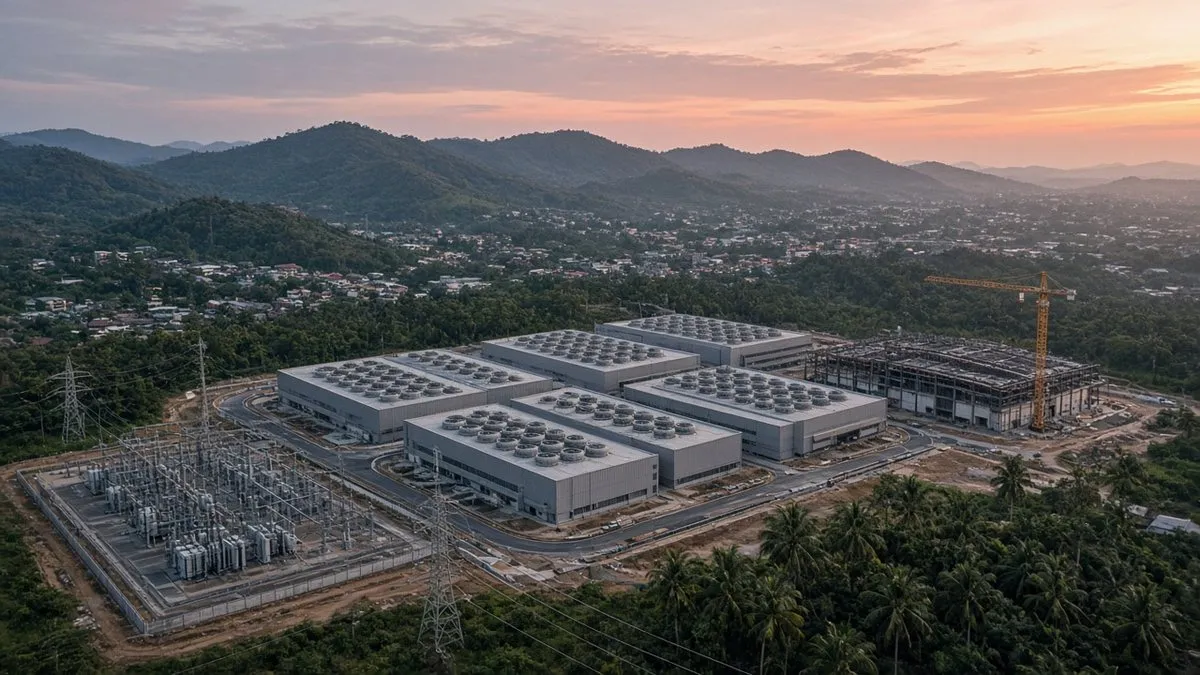
The U.S. Commerce Department on Monday released a rule that requires overseas data centers to get a license before they use advanced American AI chips to supply large amounts of computing power to companies headquartered in China and other restricted countries, closing a remote-access route that had let Chinese developers rent compute they could not legally import.
The interim final rule from the Bureau of Industry and Security also adds a new license requirement for advanced chips shipped to Indonesia, Malaysia, Singapore, Thailand and Brazil, which the rule describes as countries with a higher-than-normal risk of diversion. BIS said in its press release that the rule was "written by and at the direction of the Department of Treasury and the National Security Council."
How the two new controls work
The first control is an end-use test tied to compute volume. A license is required to export or transfer covered chips and servers, items under ECCNs 3A090 and 4A090, when the shipper knows they are headed to a data center anywhere in the world that provides more than 12 million "aggregate TPP," a measure of total processing performance, to companies headquartered in Macau or a Country Group D:5 destination such as China. The threshold counts a single site or "linked data centers," a term the rule defines to include digitally linked infrastructure. It also reaches cases where a data center serves a non-Chinese customer that is training models for a Chinese company. Applications will be reviewed case by case.
Data centers already serving those customers at that scale have 90 days from the rule's effective date to obtain a license, according to the rule text. Compute used only for "commercial recommender systems," such as those run by online retailers and social media companies, is excluded.
The second control is destination-based. Shipments of covered chips to the five named countries now need a license unless they go to a company headquartered in the United States, or whose ultimate parent is, and the exporter files monthly reports with BIS. CNA reported that the carve-out covers U.S. hyperscalers such as Amazon Web Services, Google and Microsoft.
The rule puts the diligence burden on suppliers. Exporters are expected to obtain enough information from a foreign data center about its own know-your-customer checks, including ownership by Chinese parents, and a data center's refusal to provide it is treated as a red flag, law firm Nixon Peabody wrote in a client alert. The rule takes effect on publication in the Federal Register, comments are due 60 days later, and shipments already en route may proceed if completed within 30 days. It also formally rescinds the Biden-era AI Diffusion Rule, which BIS said in May 2025 it would not enforce.
Why now
The rule is the first U.S. policy response to the scandal that led Jensen Huang to resign as Nvidia's chief executive last week, CNBC reported. Huang stepped down after reports of an affair with Alice Huang, an executive at Singapore-based cloud provider Megaspeed who was reported to be a Chinese spy; China's government has denied that claim. Venture Block covered what his exit means for Nvidia's $99 billion investment book. CNBC, citing The New York Times, said U.S. authorities began investigating Megaspeed in 2024 after it started importing billions of dollars of Nvidia equipment into Malaysia.
Chris McGuire, a former National Security Council official now at the Council on Foreign Relations, called the rule a meaningful step but wrote on X that loopholes tied to activities inside the United States remain. "I have never seen a BIS rule that was not written by BIS," he added. China's foreign ministry said the U.S. had "continuously overstretched the concept of national security," NBC News reported. The rule lands as more of Nvidia's business draws scrutiny in Washington.
Markets and the Southeast Asia buildout
Nvidia shares fell more than 4% on Monday and the Philadelphia Semiconductor Index dropped 5.3%, The Malaysian Reserve reported. On Tuesday, Malaysian data center infrastructure firm MN Holdings fell 19.05% to RM2.72 and YTL Power, which works with Nvidia on AI infrastructure, lost 10.76% to RM3.98, according to the same outlet.
Alibaba fell 5% and Tencent 3%, while Chinese foundry SMIC rose 7%, Reuters reported. "The regulatory burden has fundamentally shifted from hardware manufacturers to cloud service providers and enterprises," Counterpoint vice president Neil Shah told Reuters.
The stakes for the region are large. Malaysia has approved 385.7 billion ringgit, about $95 billion, of data center-related investment since 2021, its trade ministry says, according to Reuters. Trade Minister Johari Abdul Ghani said there were no plans for talks with Washington: "If you want to be in this game, you have to follow the regulation." Singapore said it was studying the measure and contacting U.S. authorities about its scope.
For operators, the near-term question is whether capacity built for Chinese tenants can be re-leased. Supparat Sivapetchranat Singhara na Ayutthaya, vice chairman of the Thai Data Center Association, told Reuters that Chinese users had halted GPU-as-a-service use in Thailand and that "the same supply can be re-pivoted to US customers." BIS has indicated the rule will be published and take effect on Nov. 19, according to Nixon Peabody, which would start the 90-day license deadline for operators already serving Chinese clients at scale.