Judge lets NAACP's Clean Air Act suit over xAI's Mississippi turbines go forward
A federal judge in Mississippi rejected xAI's argument that its trailer-mounted gas turbines are exempt mobile sources, letting the NAACP's Clean Air Act case over the Colossus 2 power plant proceed.
A federal judge in Mississippi has refused to throw out the NAACP's Clean Air Act lawsuit over the gas turbines that power xAI's Colossus 2 data center, rejecting the company's argument that trailer-mounted turbines count as exempt "mobile sources." Judge Debra M. Brown of the U.S. District Court for the Northern District of Mississippi denied the motion to dismiss from xAI and its subsidiary MZX Tech in a 28-page opinion dated October 30.
The ruling does not decide whether xAI broke the law. At this stage the court accepts the complaint's allegations as true and asks only whether they state a valid claim. But it clears away the three defenses xAI raised at the outset, and it follows an October 19 order in which the same judge let the federal government join the case but refused its request to dismiss it.
What the plant is
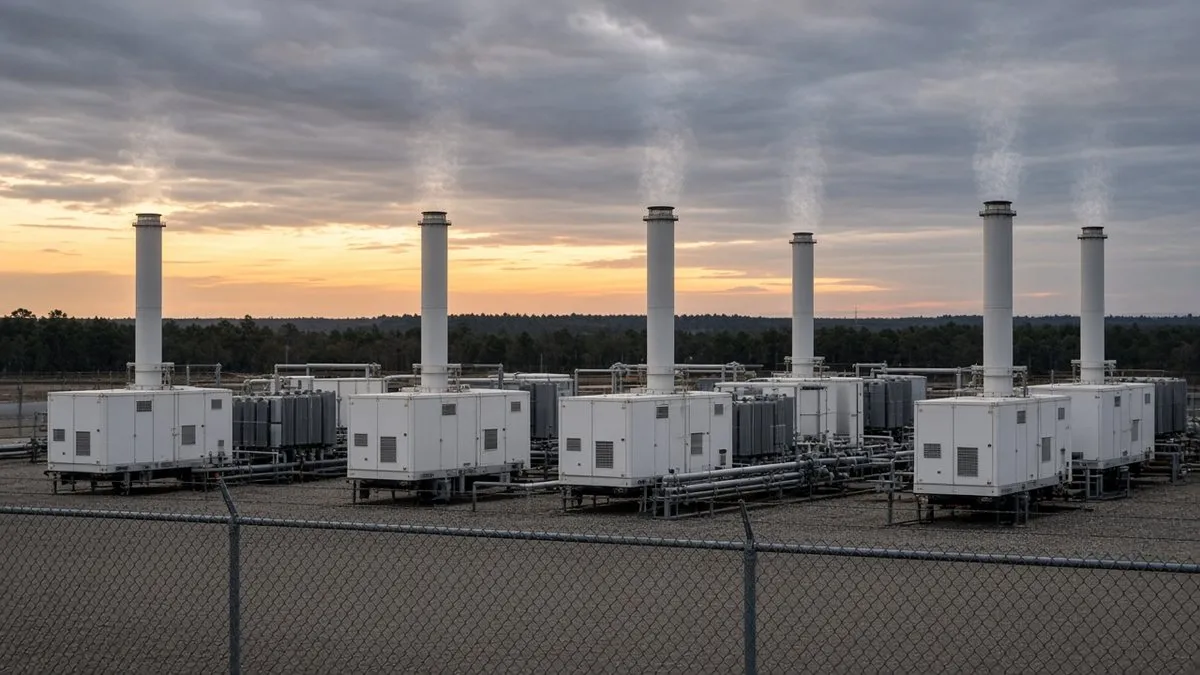
According to the complaint as summarized in the opinion, MZX Tech bought land at 2875 Stanton Road South in Southaven, Mississippi, in July 2025 to build what the filings call the Colossus Gas Plant. The plant supplies electricity to Colossus 2, the xAI data center just across the state line in the Whitehaven area of Memphis. xAI is now owned by SpaceX, CNBC reported.
The plaintiffs say the companies installed gas-fired turbines there between August 1 and December 18, 2025, and that at least 27 were on site by April 7, 2026: fourteen SMT-130 units, one M35 and twelve TM2500 units across three generations. Together they are said to have at least 495 megawatts of generating capacity and the potential to emit about 1,700 tons of nitrogen oxides, 580 tons of carbon monoxide, 180 tons of fine particulate matter and 19 tons of formaldehyde a year. The complaint says neither company applied for a federal Prevention of Significant Deterioration permit, a state permit to construct or an operating permit before running them.
The NAACP and its Mississippi State Conference, represented by the Southern Environmental Law Center and Earthjustice, filed suit on April 14. They want an injunction barring operation except in compliance with the Clean Air Act, an order to install best available control technology, and civil penalties of up to $124,426 per day per violation.
Why the "mobile" argument failed
xAI's main defense rested on a July 29, 2025 letter from the Mississippi Department of Environmental Quality. The agency wrote that it understood the turbines would stay on flatbed trailers and remain on site for less than 12 months, and on that basis acknowledged them as exempt from permitting under the state rules.
Judge Brown read the rules differently. Mississippi's plan borrows the federal definition of a mobile source: a motor vehicle, nonroad engine or nonroad vehicle. The turbines are not vehicles, so they would have to be nonroad engines. But federal performance standards for stationary combustion turbines cover any unit with a peak heat input at or above 10 MMBtu per hour that is not self-propelled while it runs, and they say explicitly that such a turbine may be mounted on a vehicle for portability. Each turbine at the plant is alleged to exceed that threshold, so the court concluded they are stationary sources under section 111 of the Clean Air Act and cannot be nonroad engines.
The agency letter did not change that result. The opinion says nothing in the Clean Air Act lets a state agency alone decide what its plan authorizes, and that Mississippi courts do not defer to agency readings of the law.
The court also held that the NAACP can sue on behalf of its members, and rejected xAI's claim that citizen suits unconstitutionally hand executive power to private parties. "Because citizen suit plaintiffs sue on their own behalf, in their own name, and seek penalties that redress harm to themselves, they are not exercising the federal government's executive power," Brown wrote.
Washington is on xAI's side
The federal government has entered the case to try to end it. After the October 19 order let it intervene, the United States filed a crossclaim against the NAACP on October 23 asking the court to declare that the government's right to intervene in a citizen suit includes the right to dismiss it. The filing argues that the suit threatens the power supply for AI work the Department of War relies on, citing a declaration that describes xAI's Grok Gov model as one of a few frontier models suited to classified networks. The October 19 order also noted that the Fifth Circuit had denied the government's request to pause the litigation.
"The courts have repeatedly rejected attempts by xAI and the DOJ to dismiss the NAACP's Clean Air Act case," Abre' Conner, the NAACP's director of environmental and climate justice, said in a statement released by Earthjustice. SpaceX did not immediately respond to CNBC, and TechCrunch said it had asked the company for comment.
The ruling lands as the power behind AI computing draws closer attention from courts, regulators and lawmakers. Venture Block has covered that thread from the debate over data centers and utility bills to Google's test of a TPU running in orbit, and Washington is also scrutinizing AI infrastructure deals, as in the Justice Department's questions about Nvidia's Hugging Face acquisition.
The NAACP's motion for a preliminary injunction, which asks the court to stop the plant from operating until it has permits and pollution controls, is still pending, according to Earthjustice.