Bedrock Robotics raises $600M at a $4.1B valuation as driverless excavators go to work
CapitalG and Emergence Capital co-led the Series C, which comes two months after Bedrock's retrofitted excavators began paid, fully autonomous work on live construction sites.
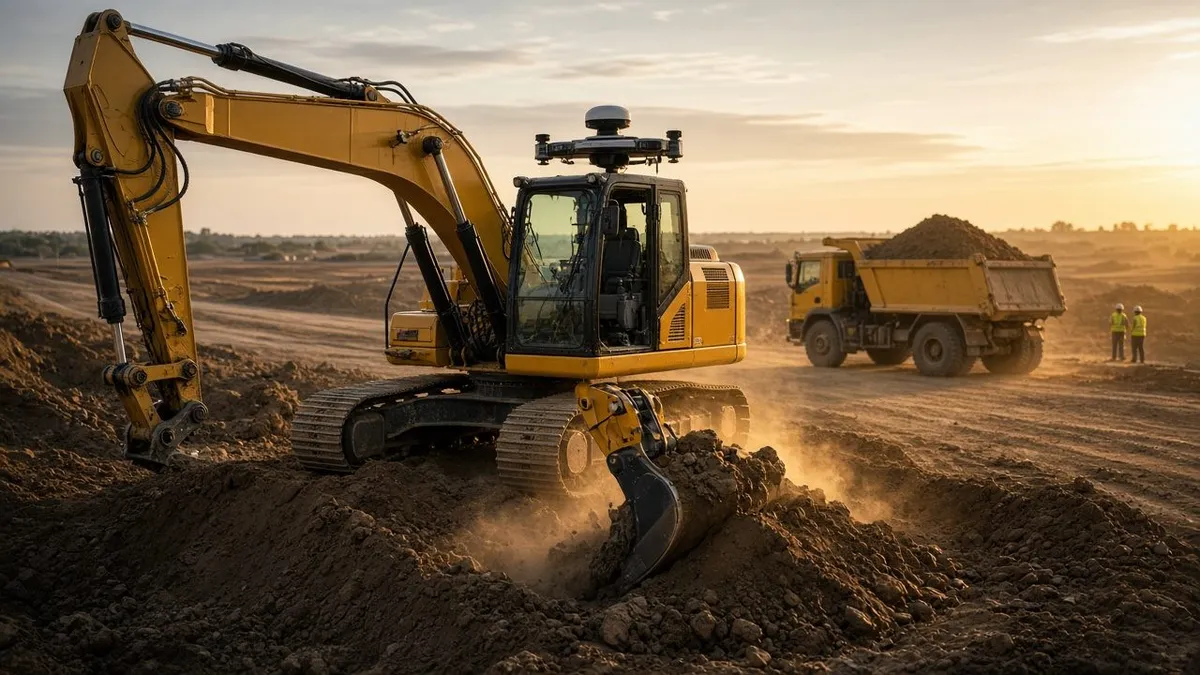
Bedrock Robotics, the San Francisco startup that retrofits excavators to dig without anyone in the cab, has raised a $600 million Series C at a $4.1 billion post-money valuation. CapitalG and Emergence Capital co-led the round, which the company announced on Monday, Oct. 26.
The raise comes roughly two months after Bedrock says its fully autonomous excavators began doing paid work on live commercial job sites in mid-August. It also lands less than nine months after the company's $270 million Series B in February, which valued it at $1.75 billion. Bedrock says the new money brings its total funding to nearly $1 billion.
Who is in the round
New investors include the US Innovative Technology Fund (USIT), Bessemer Venture Partners and Temasek, according to the company's announcement. Existing backers 8VC, Georgian, Valor Equity Partners, Xora, Eclipse, Perry Creek Capital and Nvidia also participated.
CapitalG, Alphabet's investment arm, co-led the Series B with the Valor Atreides AI Fund. Emergence, which took part in that round, has now moved up to co-lead. In a blog post, Emergence said it first backed Bedrock in 2025 and pointed to its earlier bet on DroneDeploy, a drone mapping company whose Series A it led at Series A in 2015 and which Procore acquired for $845 million this July.
"Bedrock has moved with extraordinary speed from technical development to autonomous work on live commercial sites, just one year after emerging from stealth," CapitalG general partner Derek Zanutto said in the release.
What the system does
Bedrock does not build its own machines. It sells a self-driving kit that is retrofitted onto existing construction equipment, starting with excavators. In its Series B investment memo, CapitalG described the stack in three layers: a hardware kit that connects to a machine's existing hydraulics and electronics, a machine-intelligence layer trained on full operations rather than simple if-then rules, and control software that turns project plans or CAD files into tasks for the machines.
The excavator is a deliberate first target. Emergence describes it as an articulated hydraulic machine that has to read the soil, the trucks and the people around it before deciding what to do next. Bedrock's investors argue that once the excavator works, simpler machines follow on the same software. Emergence wrote that dump trucks, dozers and loaders are next on the roadmap.
Excavators fitted with Bedrock's system are now operating commercially at a water treatment facility in Nevada, an earthwork site run by Champion Site Prep in Texas, and a 1.2 million-cubic-yard civil sitework project with Zachry Construction, TechCrunch reported.
Customers and the labor argument
Bedrock says it has more than doubled its customer volume since 2025. Its newest partner is Haydon, an employee-owned general contractor based in Tempe, Arizona, which will use the system for fully autonomous earthwork on a remote site in Texas and later test trench work and larger machine models. The company also listed new contracts with Wagner Construction in Minnesota, Smith Trucking Company in Florida, B&S Site Development in Virginia, Native Excavating in Colorado, Clarkson Construction in Missouri, C.W. Matthews in Georgia, and selected ArchKey Solutions projects in Arkansas. Those deals take its machines into the Midwest and South Atlantic for the first time.
The pitch to contractors rests on a shortage of skilled operators. Bedrock says it takes five years or more to master running an excavator, and TechCrunch cited an Associated Builders and Contractors estimate that more than 40% of construction workers will retire in the next five years. The company's release cites projections that employers will need to fill about 1.7 million skilled trade openings a year through 2035, and that 87% of construction firms report openings for hourly craft positions.
"We have proven that fully autonomous excavators can perform real work of value alongside the crews and workflows already in place on job sites. The next challenge is delivering that capability to more contractors as a dependable part of how projects get built," co-founder and CEO Boris Sofman said.
Bedrock is not alone in heavy-equipment autonomy. AIM Intelligent Machines, which also retrofits existing machines, has moved from mining and construction into defense work with the U.S. Air Force, and autonomy is spreading to other field equipment such as TerraClear's field-scouting robot.
The team and what comes next
Bedrock was founded in 2024 and came out of stealth in July 2025 with $80 million in seed and Series A funding. Sofman previously led Waymo's now-shuttered self-driving trucks program and co-founded Anki, the maker of the Cozmo robot. His co-founders are CTO Kevin Peterson and Ajay Gummalla, both Waymo veterans, and Tom Eliaz, who previously worked at Segment and Twilio.
Alongside the round, Bedrock hired Amy Jones Satrom, who has worked at Amazon, Nuro and Uber, as vice president of operations, and Lando Juarez, formerly head of legal for Uber's autonomous mobility and delivery business, as general counsel. The company says it will use the capital to expand deployments with more contractors and build out the field operations that support each machine on site.