From Torture to Triumph: The Ingenious Curta Calculator’s Journey from Buchenwald to Seattle
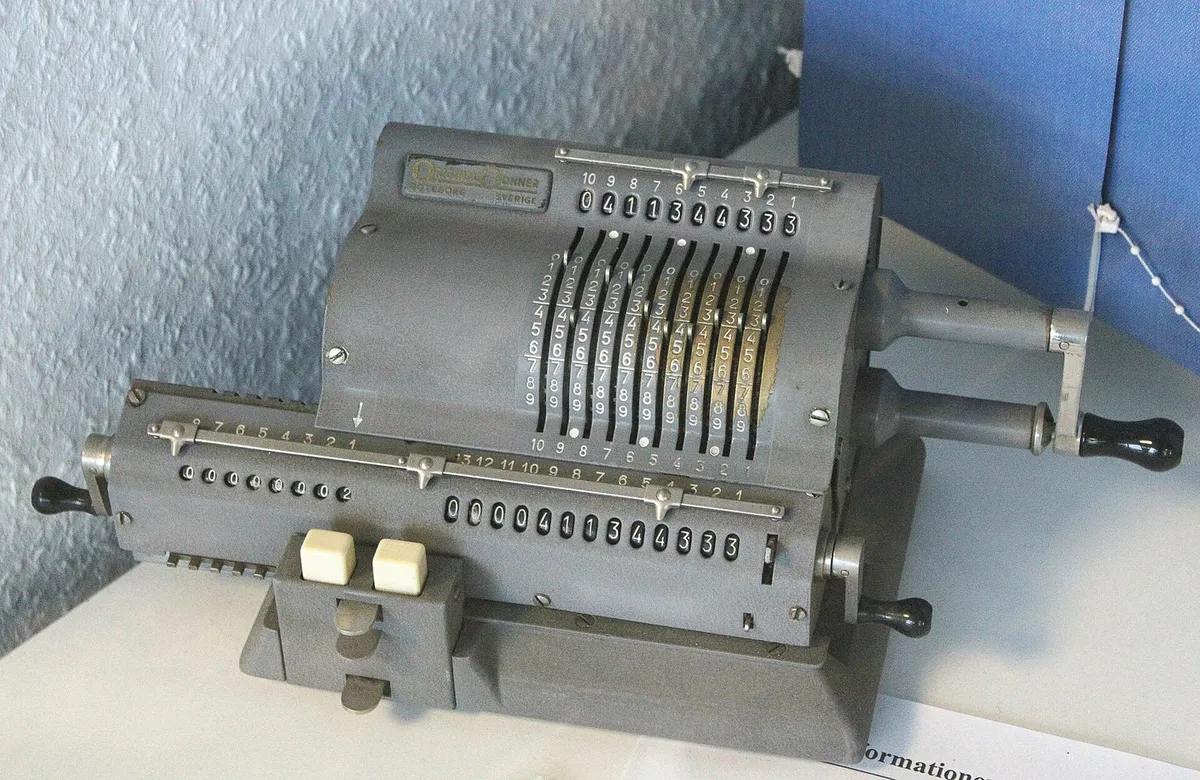
A remarkable piece of computing history will soon be on display at Seattle’s Holocaust Center for Humanity, showcasing mechanical calculators that emerged from one of humanity’s darkest periods. The Curta calculator, an ingenious mechanical device invented by Curt Herzstark while imprisoned in the Buchenwald concentration camp during World War II, represents both technological innovation and human resilience.
Herzstark began developing his revolutionary calculator in Austria during the 1930s, but his work was interrupted in 1938 when Nazi authorities commandeered his company to produce military equipment. In 1943, he was sent to Buchenwald, where, remarkably, he was permitted to continue his design work under the promise that completing the calculator might secure his freedom. After the camp’s liberation by American forces in 1945, Herzstark’s invention went into production, becoming the world’s leading portable calculator until electronic alternatives emerged in the 1970s.
Seattle native Don Rosen, an 87-year-old mechanical engineer who still serves as engineering manager at his family’s business, Alaskan Copper Works, has assembled an impressive collection of these historical devices. His connection to the Curta stems from identifying with Herzstark’s background as a fellow mechanical engineer working in a family business.
The Curta’s popularity surged in 2004 following a Scientific American article highlighting its unique history. The advent of eBay created a marketplace for these devices, which now typically sell for around $1,500. Of the 140,000 Curta calculators manufactured between 1948 and 1972, Rosen estimates only about 3,000 remain. His personal collection includes 71 specimens, ranging from the fourth-oldest known example to some of the final units produced.
What makes the Curta particularly remarkable is Herzstark’s
achievement in miniaturizing existing calculator technology. He transformed what had been bulky 35-45 pound desktop machines into a portable device, accomplishing much of the detailed design work from memory while imprisoned. Without access to reference materials or technical resources, Herzstark had to specify not only the design but also the manufacturing tolerances and material requirements.
The precision of the Curta’s construction rivals that of fine watchmaking, with intricate moving parts that require careful handling and expertise to maintain. Rosen, who has dedicated considerable time to restoring these devices to museum quality, notes that many enthusiasts who attempted to disassemble the calculators struggled to reassemble them due to their complexity.
The Seattle Holocaust Center for Humanity will feature these historical calculators beginning Sunday, with Rosen scheduled to present a talk about their significance from 2 p.m. to 3 p.m. The exhibition, hosted at the center’s Second Avenue location, offers visitors a unique opportunity to examine these remarkable devices that bridge the gap between technological innovation and historical preservation.
Particularly poignant is how the Curta calculator represents survival and ingenuity in the face of persecution. In an era where mathematical calculations are instantly available through smartphones and AI assistants, these mechanical marvels serve as a testament to human creativity and perseverance under the most challenging circumstances imaginable.