Revolutionizing Chemistry: How Cloud Computing is Transforming Computational Research and Accelerating Scientific Discovery
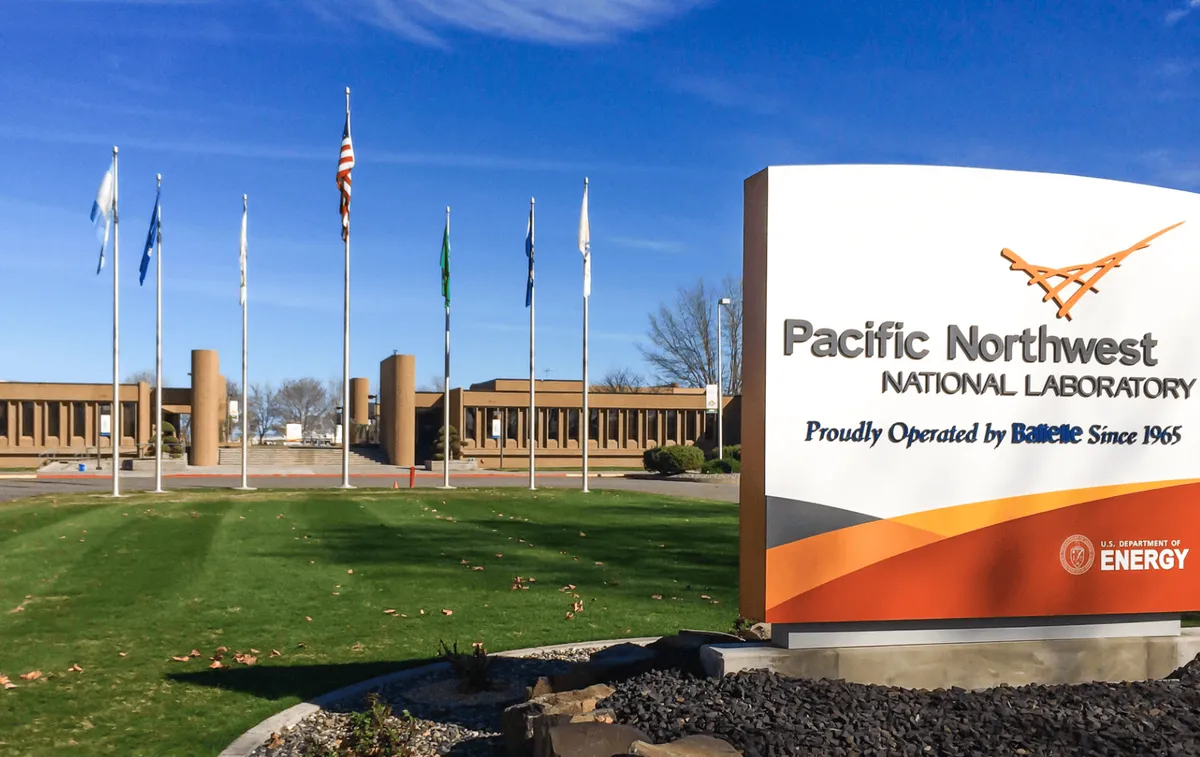
Researchers from the Pacific Northwest National Laboratory (PNNL) are spearheading an initiative to accelerate computational chemistry through cloud computing. This project, known as Transferring Exascale Computational Chemistry to Cloud Computing Environment and Emerging Hardware Technologies (TEC4), aims to make supercomputer-level resources more accessible via cloud platforms.
The team’s progress, detailed in a study published in the Journal of Chemical Physics, demonstrates how cloud computing can complement traditional high-performance computing methods for tackling complex scientific challenges. Karol Kowalski, a computational chemist at PNNL who led the cross-disciplinary effort, described this approach as “an entirely new paradigm for scientific computing.”
TEC4 utilizes a combination of resources, including Berkeley Lab’s Perlmutter supercomputer, Microsoft’s Azure Quantum Elements platform, and NWChem, a computational chemistry software package developed at PNNL. Nathan Baker, product leader for Azure Quantum Elements, highlighted the collaboration as an exemplary use of modern AI and high-performance computing tools to advance computational chemistry.
In a proof-of-concept exercise, the researchers simulated chemical interactions involving perfluorooctanoic acid (PFOA), a persistent environmental pollutant formerly used in non-stick coatings and firefighting foam. The simulation traced a step-by-step process that broke down some of PFOA’s molecular bonds, providing insights into potential degradation pathways for this “forever chemical.”
The project’s implications extend beyond environmental science. By making supercomputer-scale resources more widely available through cloud computing, TEC4 could accelerate research across various fields of chemistry. The team is now seeking additional collaborators to further test and refine their cloud-based platform.
Educational initiatives are already underway, with a graduate-level course based on TEC4 developed at the University of Texas at El Paso in collaboration with PNNL and Central Michigan University. Kowalski emphasized that TEC4 is not only pointing towards new chemical discoveries but also revolutionizing the practice of chemistry itself.
The researchers envision a future where users can access different levels of computing power, paying only for what they need and bundling software with compute access. This flexible approach could leverage GPU-based computing, which is increasingly used in artificial intelligence and machine learning applications.
The study, titled “Electronic Structure Simulations in the Cloud Computing Environment,” boasts 32 authors from various institutions, including PNNL, Microsoft Quantum, Berkeley Lab, Argonne National Lab, Central Michigan University, the University of Texas at El Paso, and the University of Washington.
This collaborative effort represents a significant step towards democratizing access to advanced computational chemistry tools. By harnessing the power of cloud computing, researchers aim to accelerate scientific discovery and innovation in chemistry and related fields.
The TEC4 project demonstrates the potential for cloud-based platforms to transform scientific computing, offering researchers more flexible and accessible tools for tackling complex chemical problems. As this technology continues to evolve, it could lead to breakthroughs in areas such as environmental remediation, drug discovery, and materials science.
The success of TEC4 also highlights the importance of
interdisciplinary collaboration in advancing scientific research. By bringing together experts from various fields and institutions, the project has created a powerful new tool for computational chemistry that could have far-reaching impacts on both academia and industry.
As the team continues to refine and expand their platform, the future of computational chemistry looks increasingly cloud-based, offering researchers unprecedented access to high-performance computing resources and paving the way for new discoveries and innovations in the field.