Avalanche Energy Advances Compact Nuclear Batteries with $5.2 Million DARPA Contract
Seattle-based fusion startup Avalanche Energy has secured part of a $5.2 million U.S. Department of Defense contract announced on Wednesday, aimed at creating compact nuclear batteries.
The funding stems from DARPA’s Rads to Watts program, an initiative dedicated to producing durable batteries for defense and space missions where traditional chemical batteries, solar energy, and refueling options are impractical.
Avalanche’s work centers on creating micro-fabricated energy cells capable of converting alpha particles released by radioactive material into usable electricity. According to the team, this mechanism mirrors how solar cells transform photons into power.
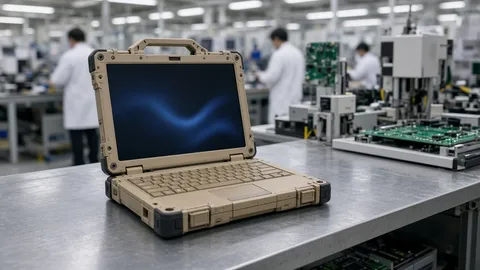
Daniel Velázquez, Avalanche’s physicist and materials science lead, explained that the objectives include creating a device with extended longevity that can generate significantly more power than existing technologies. The aim is to develop a battery weighing approximately 10 pounds that could continuously run a laptop computer for several months.
The project timeline is demanding. Within 30 months, the program seeks to confirm the underlying physics and produce a functioning prototype that generates power.
Velázquez characterized the endeavor as highly ambitious.
Avalanche heads the collaborative team addressing DARPA’s nuclear battery initiative, partnering with the University of Utah, Caltech, Los Alamos National Laboratory, and McQuaide Microsystems.
The nuclear battery field has other players, including Seattle-based Zeno Power. That startup intends to demonstrate its first complete radioisotope power system this year and begin commercial nuclear battery production by 2027.
Although Avalanche’s ultimate objective involves developing a compact fusion-based energy device that mimics the sun’s power-generating reactions, Velázquez noted that the DARPA project directly supports this broader ambition. Significant parallels exist between harvesting energy from nuclear batteries and from fusion reactions.
This work should position the company competitively in the worldwide effort to commercialize fusion power, which promises virtually unlimited clean energy. Supporting domestic companies, the Department of Energy plans to allocate a historic $135 million over 18 months to advance fusion research, as Axios reported today.
Power demand is surging due to data center expansion and the transition from fossil fuels toward electrification.
Since its 2018 inception, Avalanche has developed multiple revenue streams. Last month, the company revealed its participation in a team receiving $1.25 million from AFWERX, the Department of the Air Force’s innovation division, to create advanced materials for extreme conditions.
Additional initiatives include utilizing its fusion technology to generate neutrons for commercial clients; a Pentagon contract for developing space propulsion technology; and a state grant to establish FusionWERX, a commercial-scale fusion technology testing facility in Eastern Washington.
This February, Avalanche secured $29 million in fresh investment from backers, pushing its total funding beyond $105 million when combining venture capital and government grants. The company is deploying this substantial financial resource across fusion, propulsion, and compact nuclear battery development.