Blue Origin’s Ambitious Satellite Launch Ends in Orbit Setback Amid Successful Rocket Recovery
Blue Origin achieved a significant milestone by successfully launching a satellite using a refurbished New Glenn rocket booster, though the mission ultimately ended in disappointment when the payload failed to reach its proper orbital destination.
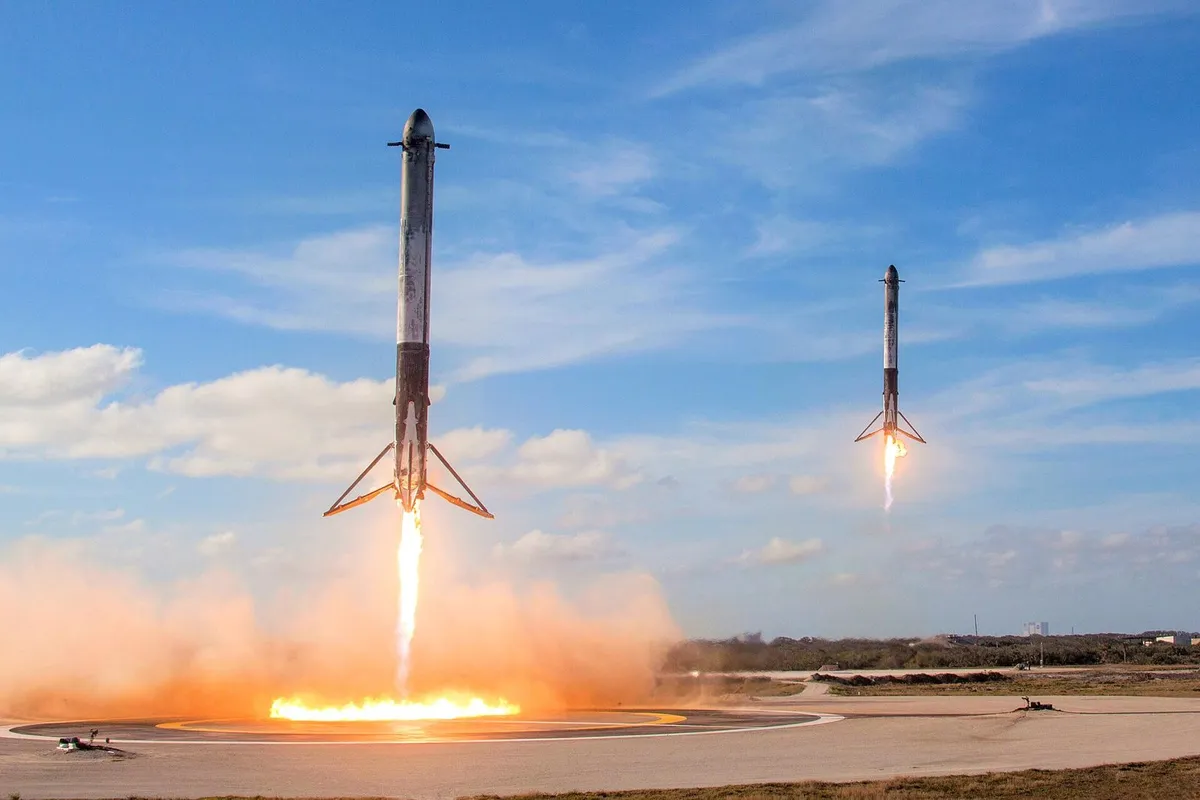
The aerospace company, founded by Jeff Bezos, launched the mission from Cape Canaveral Space Force Station’s Launch Complex 36 in Florida at 7:25 a.m. Eastern Time. The first-stage booster, bearing the nickname “Never Tell Me the Odds,” successfully completed its second landing on the Atlantic Ocean-based platform named Jacklyn, honoring Bezos’ mother. This marked the booster’s second flight, having previously launched NASA’s Escapade Mars probes in November.
The touchdown drew enthusiastic reactions from Blue Origin personnel stationed at various locations, including Mission Control in Florida, the company’s Kent, Washington headquarters, and facilities in Texas and Alabama. Launch commentator Tabitha Lipkin welcomed the booster back, noting the achievement of its second successful recovery. Bezos shared video footage of the landing on social media platforms.
This launch represented New Glenn’s third orbital mission. The rocket’s inaugural flight in January 2025 carried a test payload for Blue Origin’s Blue Ring space mobility platform communication systems. The company attempted recovery of that initial booster, nicknamed “So You’re Telling Me There’s a Chance,” but the effort was unsuccessful.
However, the mission encountered serious problems with its primary objective. Blue Origin confirmed payload separation approximately two hours and fifteen minutes after liftoff, an hour longer than scheduled. The company’s status update revealed that BlueBird 7 had been deployed into an off-nominal orbit, though the satellite had powered on.
AST SpaceMobile, the Texas-based satellite operator, subsequently announced that BlueBird 7 had been placed in a lower orbit than planned by the rocket’s upper stage. The altitude proved insufficient for the satellite to maintain operations using its onboard propulsion system, necessitating deorbiting. The company expects its insurance policy to cover the satellite’s cost.
The Federal Aviation Administration has designated the incident as a mishap, grounding New Glenn rockets pending Blue Origin’s
investigation into the failure’s cause and implementation of corrective measures under FAA supervision. Reports indicate the satellite was placed in a highly elliptical orbit, suggesting the upper stage failed to properly execute the engine burn required for orbit circularization.
BlueBird 7 was intended to join seven existing satellites in AST’s constellation, including the BlueWalker prototype. These satellites are engineered to provide cellular broadband connectivity directly to standard smartphones from space.
Despite this setback, AST SpaceMobile maintains plans to deploy approximately 45 satellites by the end of 2026, conducting launches at one to two-month intervals on average through agreements with multiple launch providers. Company president and chief strategy officer Scott Wisniewski previously indicated that commercial service could begin in initial markets once 45 to 60 satellites are operational. AST SpaceMobile’s services will be delivered through partnerships with AT&T, Verizon, and other wireless carriers.
The direct-to-device connectivity sector has become increasingly competitive. SpaceX pioneered this market with a 2022 agreement with T-Mobile and is expanding its Starlink network to support cellular subscribers. Amazon recently announced plans to acquire
Louisiana-based Globalstar and partner with Apple to enhance D2D services, potentially benefiting the Amazon Leo satellite network, a Starlink competitor scheduled to begin commercial operations this year.
Rocket reusability has long been dominated by SpaceX, whose
cost-reduction strategy heavily relies on recovering and reusing boosters. Despite the BlueBird 7 deployment failure, the successful booster recovery demonstrates Blue Origin’s growing capability in this technological domain, positioning the company to compete more effectively in the commercial launch market.