Interlune’s Lunar Ambitions: Pioneering Helium-3 Mining with Revolutionary Partnerships and Technology
Seattle-based space mining company Interlune has announced significant progress in its ambitious mission to extract helium-3 from the moon, revealing key partnerships and customer agreements that bring lunar resource utilization closer to reality.
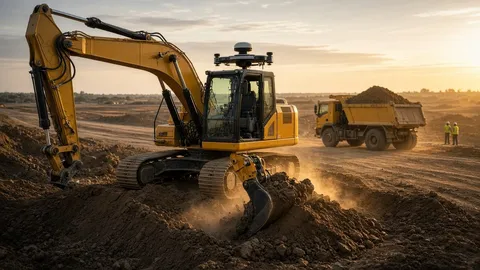
The company unveiled a groundbreaking partnership with Iowa-based industrial equipment manufacturer Vermeer Corporation, showcasing a full-scale prototype excavator capable of processing 100 metric tons of lunar regolith per hour. The machine is designed to extract helium-3 while returning processed material to the lunar surface in a continuous operation.
Concurrent with this technological advancement, Interlune secured agreements with both the U.S. Department of Energy and Maybell Quantum Industries for future helium-3 supply, targeting deliveries beginning in 2029.
Helium-3, a rare isotope with applications in quantum computing, fusion power, medical imaging, and national security, is scarce on Earth but naturally abundant on the moon due to solar wind deposition. Interlune aims to pioneer commercial lunar mining operations to meet growing terrestrial demand for this valuable resource.
The collaboration with Vermeer represents a crucial step in developing reliable lunar mining equipment. Vermeer CEO Jason Andringa, who will join Interlune’s advisory board, emphasized the significance of combining space exploration with his grandfather’s legacy in equipment manufacturing. The partnership has already demonstrated success through subscale prototype testing conducted last summer.
Interlune’s executive team brings substantial space industry experience, with CEO Rob Meyerson previously serving as Blue Origin’s president from 2003 to 2018, and CTO Gary Lai, former chief architect of Blue Origin’s New Shepard spacecraft and a space traveler himself.
Under the agreement with Maybell Quantum, Interlune will supply thousands of liters of helium-3 annually between 2029 and 2035, supporting the growing quantum computing industry’s need for ultra-low temperature cooling systems. The Department of Energy contract specifies delivery of three liters by April 2029 at current market rates, approximately $2,500 per liter according to recent industry reports.
The company’s development roadmap includes three lunar missions over the next five years. The initial “Crescent Moon” mission, scheduled for late 2025, will deploy a hyperspectral camera as a rideshare payload to the lunar south pole. This will be followed by “Prospect Moon,” featuring a dedicated lander to validate helium-3
concentrations and extraction methods. The final “Harvest Moon” mission will demonstrate complete end-to-end resource extraction and return capabilities.
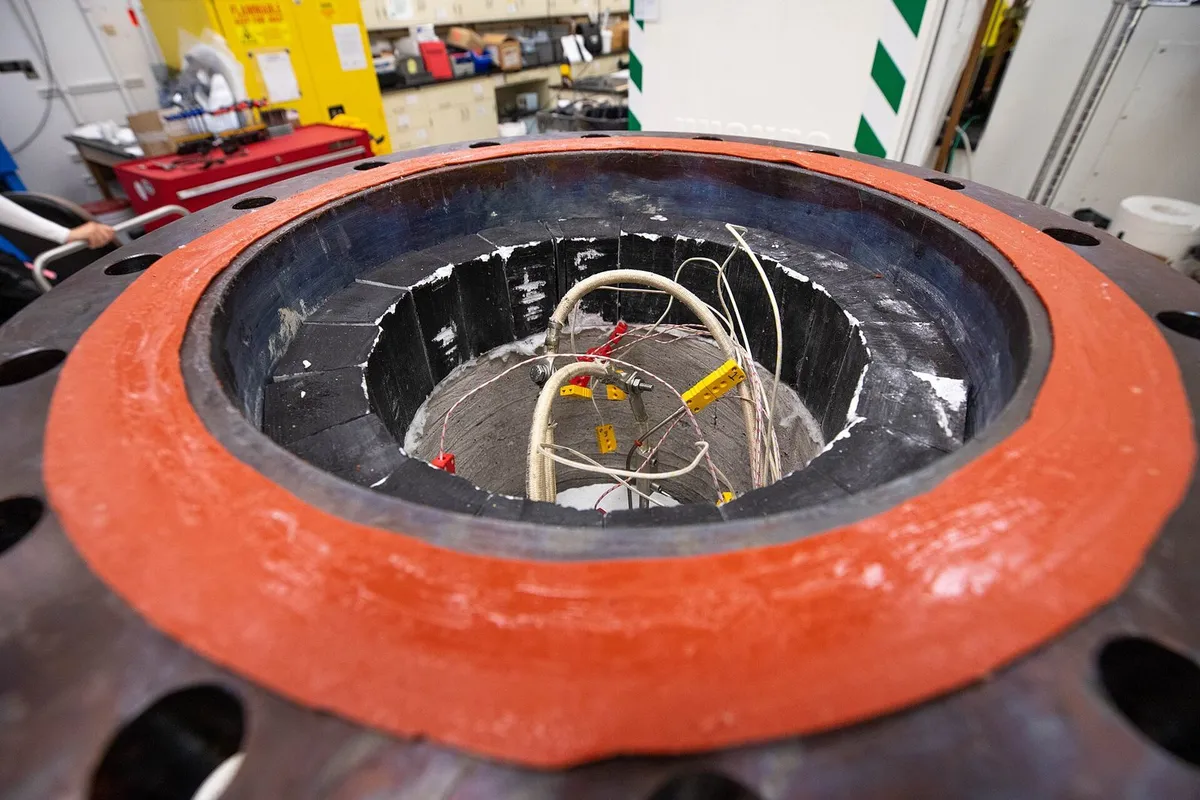
Interlune has secured substantial funding and support, including an $18 million seed round last year and a recent $4.84 million grant from the Texas Space Commission for a lunar soil processing research center. Additional backing includes grants from NASA and the National Science Foundation for lunar soil processing technology development, plus Department of Energy funding for terrestrial helium-3 separation research in partnership with Pacific Northwest National Laboratory.
The venture marks a significant step toward commercializing lunar resources, with Interlune establishing itself as a pioneer in space mining operations. Their approach combines innovative engineering solutions with strategic partnerships to address the growing demand for helium-3 in advanced technology applications.
The company’s progress demonstrates the increasing viability of lunar resource utilization, potentially opening new frontiers in space commercialization while addressing critical needs in quantum computing, medical technology, and energy production on Earth.