NASA Prepares for Historic Artemis 2 Lunar Mission with Successful Launch Rehearsal
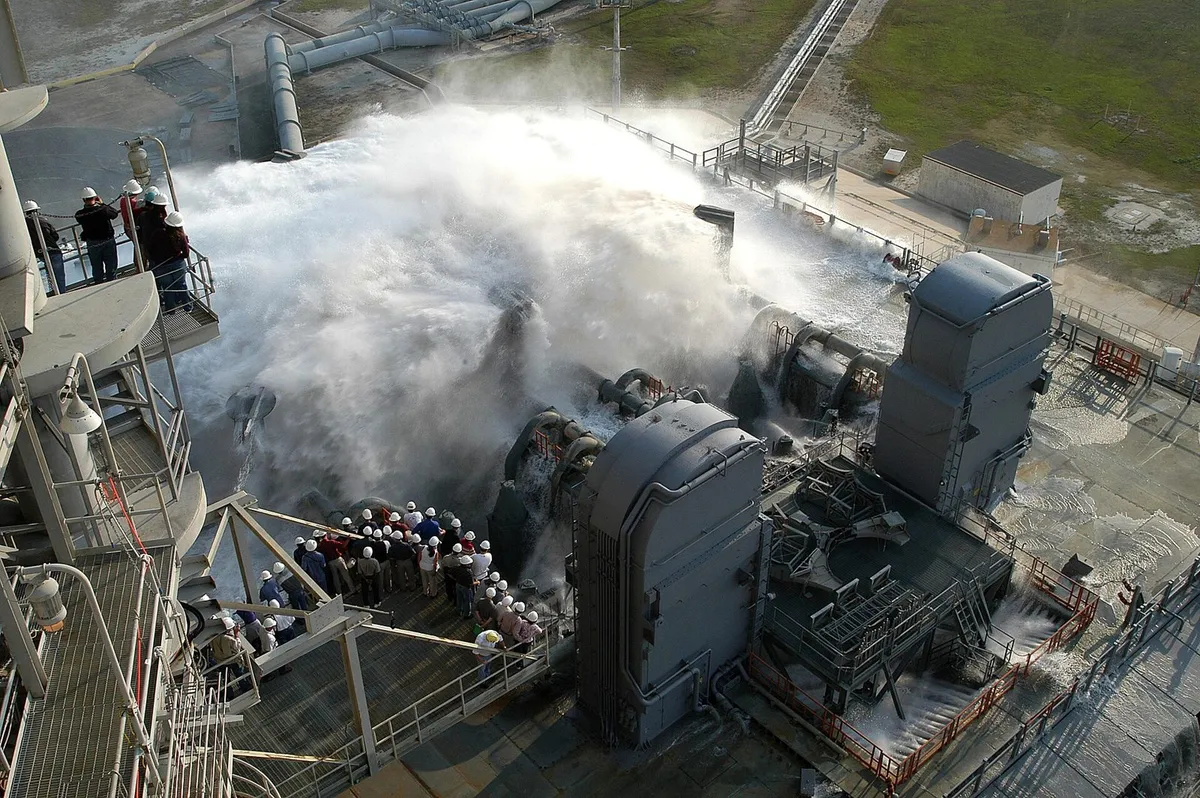
NASA successfully conducted a comprehensive launch rehearsal for the upcoming Artemis 2 mission, with the countdown proceeding smoothly to T-minus 29 seconds at Kennedy Space Center’s Launch Complex 39B in Florida.
The exercise, referred to as a wet dress rehearsal due to the fueling of the Space Launch System rocket’s propellant tanks, marked a crucial milestone in preparations for what could be humanity’s first crewed lunar mission in over 50 years. The 322-foot-tall Space Launch System rocket, which previously flew during the unmanned Artemis 1 mission in 2022, stood ready at the pad with all components present except the astronaut crew.
Mission Commander Reid Wiseman, a NASA astronaut, observed the proceedings from the Launch Control Center and shared updates via social media platform X. Following a thorough evaluation of the two-day rehearsal’s outcomes, mission managers will make the final determination on whether to proceed with the 10-day lunar journey.
NASA is currently aiming for a March 6 launch date. Lori Glaze, who serves as acting associate administrator for NASA’s Exploration Systems Development Mission Directorate, expressed enthusiasm about the upcoming mission during a press briefing, noting her excitement each time she observes the moon and declaring the agency’s readiness.
The simulation allowed NASA to evaluate the Space Launch System rocket, Orion crew capsule, and ground support infrastructure ahead of the actual launch. An earlier rehearsal attempt on February 2 had been halted at approximately T-minus 5 minutes because of a liquid hydrogen leak. Engineers performed on-site repairs, including replacing hydrogen seals, enabling this week’s successful rehearsal.
During Thursday evening’s countdown, the team encountered
communication issues at the launch pad and managed a booster avionics system voltage anomaly in the final countdown minutes. Despite these challenges, the count advanced as intended to T-minus 33 seconds before being paused and reset to T-minus 10 minutes.
After approximately one hour spent reconfiguring the rocket’s fueling systems, the launch team executed an even smoother second countdown attempt, reaching the planned stopping point at T-minus 29 seconds.
Launch Director Charlie Blackwell-Thompson reported that the maximum hydrogen leak rate during fueling measured just 1.6%, significantly below NASA’s 16% threshold, essentially indicating negligible leakage. John Honeycutt, chairing the Artemis 2 Mission Management Team, also provided a positive evaluation of the day’s activities.
The four-person crew began their quarantine period following the rehearsal. Along with Wiseman, the team includes NASA astronauts Christina Koch and Victor Glover, as well as Canadian Space Agency astronaut Jeremy Hansen. Glaze confirmed the crew’s presence in Florida during the rehearsal but noted they would commence quarantine in Texas.
The Artemis 2 mission profile involves a figure-8 trajectory around the moon, taking the crew to a distance of 4,600 miles beyond the lunar far side—establishing a new record for human space travel distance.
While historically significant on its own, Artemis 2 primarily serves as preparation for Artemis 3, which intends to achieve the first human lunar landing since Apollo 17 in 1972. Official scheduling places Artemis 3 no earlier than mid-2027, though industry analysts anticipate potential delays.
Multiple companies based in the Seattle region have substantial involvement in the Artemis program. L3Harris operates a Redmond facility that manufactures thrusters for the Orion spacecraft. Additionally, Blue Origin, Jeff Bezos’ space company headquartered in Kent, is creating a Blue Moon lander designed to deliver Artemis crews to the lunar surface beginning in 2030. Blue Origin’s New Glenn rocket is expected to transport an unmanned cargo variant of the lander to the moon within the coming months.