NASA Restructures Artemis Program: Blue Origin’s Blue Moon Takes Center Stage for Lunar Exploration
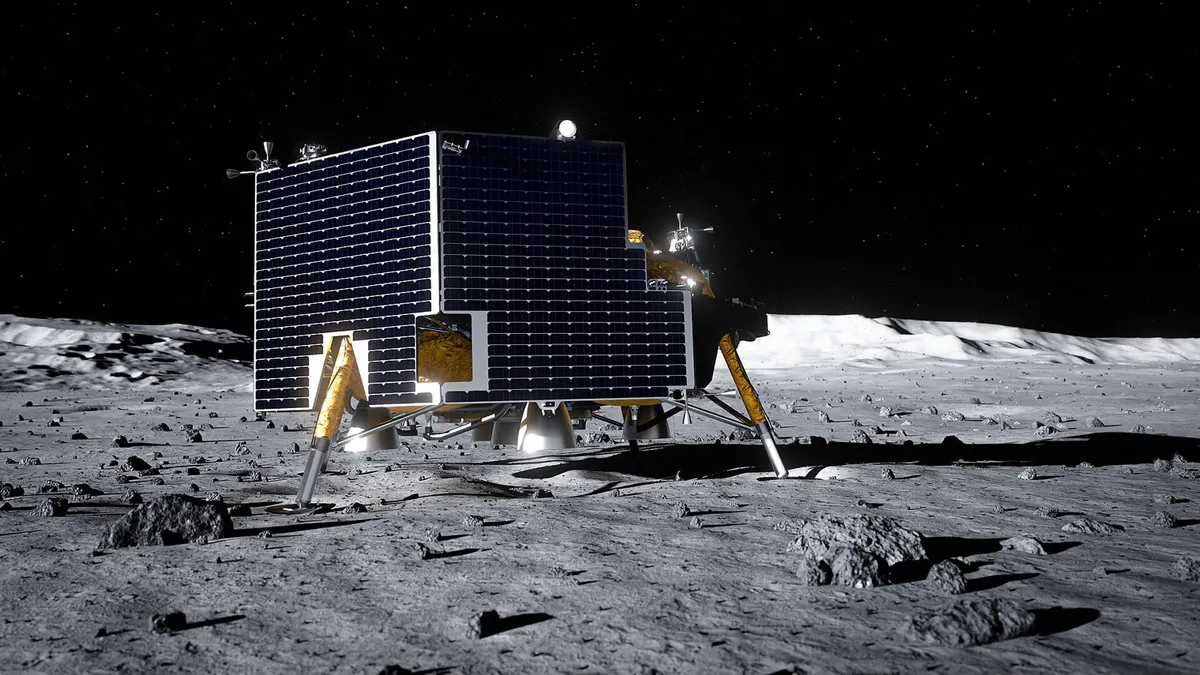
NASA has announced a significant restructuring of its Artemis lunar exploration initiative, introducing a testing mission for commercial lunar landing vehicles in low Earth orbit scheduled for next year, with a crewed moon landing now planned for 2028 at the earliest. The updated strategy enhances the role of the Blue Moon lander currently under development by Blue Origin, the space company founded by Jeff Bezos.
Blue Origin CEO Dave Limp expressed enthusiasm for the changes, declaring on social media platform X that the company is fully committed. The announcement came from NASA Administrator Jared Isaacman, who assumed leadership of the agency in December, describing this as the roadmap for returning to the lunar surface.
The immediate next phase remains unchanged: NASA plans to utilize its massive Space Launch System rocket to send four astronauts around the moon aboard an Orion spacecraft on a 10-day journey. This Artemis 2 mission is currently scheduled no earlier than April, following delays caused by a helium pressurization leak issue that required the vehicle to be rolled back from the launch pad this week for repairs.
Previously, NASA intended to conduct a crewed lunar landing in the following year as part of Artemis 3. However, development of the SpaceX Starship lander designated for that mission has not progressed as quickly as anticipated.
The revised strategy transforms Artemis 3 into a crewed testing mission for either SpaceX’s Starship lander or Blue Origin’s Blue Moon lander, along with validation of spacesuits designed for crew members’ extravehicular activities. The program’s initial crewed lunar touchdown would then occur in 2028, utilizing either the Starship or Blue Moon vehicle.
This approach mirrors the mission structure of the Apollo program from the 1960s, which featured an Earth orbit test of the lunar module during Apollo 9, occurring just months before Apollo 10’s
moon-orbiting test and the landmark Apollo 11 lunar landing.
The updated mission framework also eliminates plans for developing an advanced upper stage for the SLS rocket intended for missions after Artemis 4. Instead, NASA will collaborate with commercial partners on a rocket design enabling at least one annual lunar surface mission.
Isaacman emphasized that standardizing vehicle design, increasing launch frequency, and advancing through objectives in a systematic, incremental manner was the formula for achieving the seemingly impossible in 1969, and will be the approach used again.
Boeing, which had been responsible for the advanced upper stage development, indicated support for the new direction. Steve Parker, president and CEO of Boeing Defense, Space and Security, stated in an official release that their workforce and supply chain are ready to meet increased production demands as NASA establishes an accelerated launch schedule.
NASA indicated it will refine the specifics of next year’s Artemis 3 test mission following comprehensive reviews with industry partners.
Blue Origin is already expediting its Blue Moon development efforts. Last month, the Washington-based company announced it would suspend its suborbital New Shepard program for at least two years to redirect resources toward Blue Moon and additional lunar initiatives.
An unpiloted cargo variant of the Blue Moon lander is scheduled for launch to the lunar surface this year. Three years ago, Blue Origin secured a $3.4 billion NASA contract to provide a crewed version of the lander beginning with Artemis 5, planned for the 2029 timeframe.
When indications of a revised Artemis schedule emerged last year, a Blue Origin executive indicated the company’s Blue Moon development timeline could be adjusted accordingly. John Couluris, vice president of Blue Origin’s lunar permanence division, stated last September that the current schedule aligns with Artemis 5, but if NASA requests earlier deployment, the company would accelerate development significantly.