Navigating the Future: The Promise and Challenges of Autonomous Wheelchairs at Airports
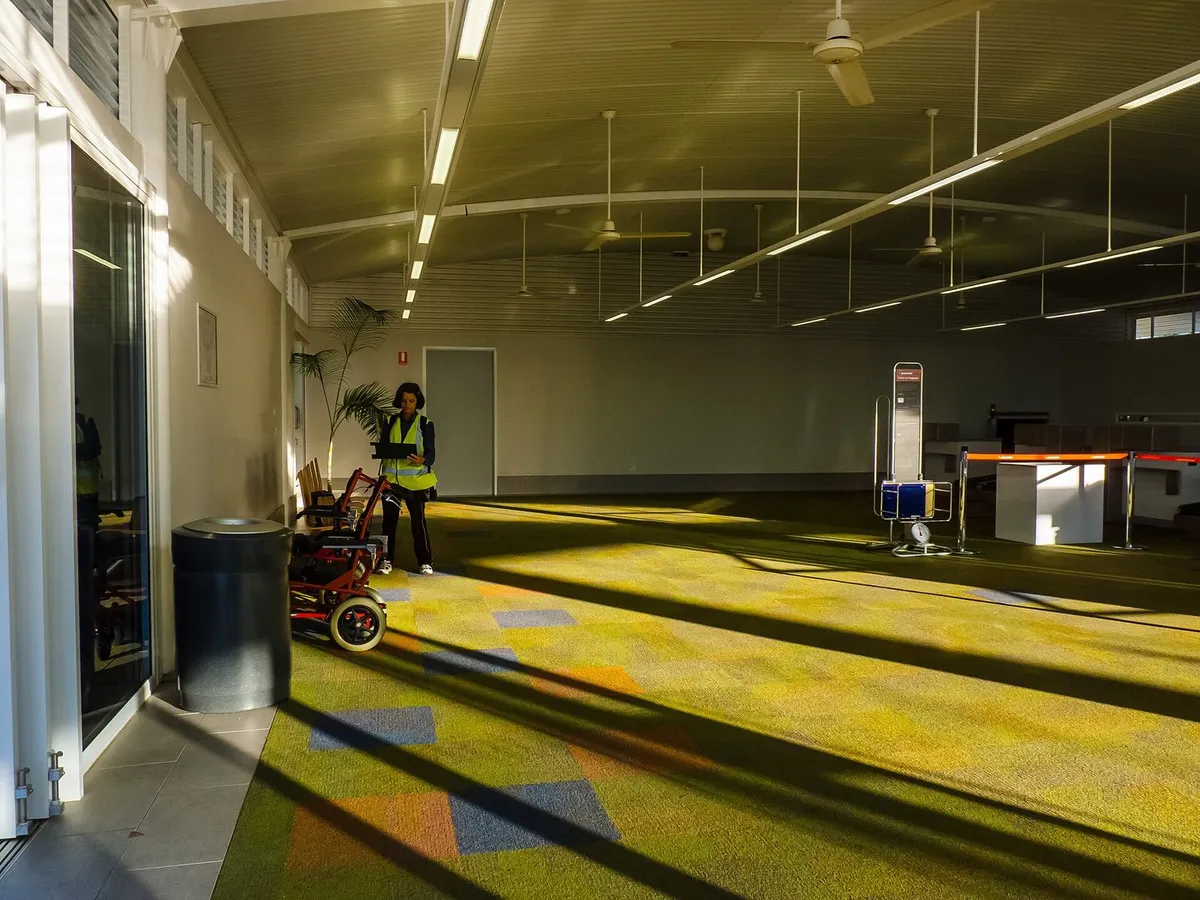
During a recent observation at Sea-Tac International Airport, an autonomous electric wheelchair encountered difficulties navigating around unexpected obstacles in the terminal. The self-driving mobility device, part of an ongoing testing program, became immobilized when it encountered a temporary wet floor warning setup consisting of a yellow tent and bucket.
The wheelchair, manufactured by California and Japanese-based company Whill, repeatedly announced “Excuse me, please step aside” when confronted with the obstacles. The situation was eventually resolved when a nearby passenger removed the items from the wheelchair’s path, allowing it to continue its journey back through the concourse after completing a passenger transport to their gate.
An Alaska Airlines representative explained that this response is actually a built-in safety mechanism. The WHILL chairs operate on pre-mapped routes, following specific “lanes” to approved destinations throughout the airport. When the chair’s sensors detect any
obstruction in these predetermined paths, they trigger a standardized response, typically intended for situations involving people or luggage rather than stationary objects.
This incident highlights a known limitation in the autonomous wheelchair system, which has been previously documented. The challenge of navigating around unexpected obstacles represents one of the ongoing hurdles in implementing this technology effectively in busy airport environments.
Whill has been actively deploying these autonomous wheelchairs in various airports across the United States and internationally. The program aims to enhance mobility assistance for passengers requiring wheelchair support while traveling through airport terminals. However, instances like this demonstrate the continuing challenges of autonomous navigation in dynamic public spaces where temporary obstacles and changing conditions are common.
The situation underscores both the potential and limitations of autonomous mobility solutions in complex indoor environments. While the wheelchair successfully performs its primary function of transporting passengers to their gates, its ability to handle unexpected obstacles remains an area for improvement. The pre-mapped routing system, while providing consistent and reliable paths through the airport, can be disrupted by simple temporary obstacles that human-operated wheelchairs would easily navigate around.
This type of incident represents the real-world challenges faced when implementing autonomous technologies in public spaces. The
safety-first approach of the system, while sometimes causing temporary interruptions, ensures passenger safety but also highlights the need for continued refinement of the technology to better handle common airport scenarios.
The deployment of these self-driving wheelchairs at Sea-Tac is part of a broader trend of airports exploring autonomous solutions to enhance passenger services. While the technology shows promise in reducing the workload on airport staff and providing consistent service to passengers requiring mobility assistance, incidents like this demonstrate that the technology is still evolving and adapting to the complex dynamics of airport operations.
The wheelchair’s predetermined response to obstacles, while
potentially inconvenient in some situations, reflects a careful balance between autonomous operation and safety considerations. This cautious approach ensures passenger safety but also means that human intervention may occasionally be necessary to resolve situations that the autonomous system cannot handle independently.
As airports continue to test and implement these autonomous mobility solutions, experiences like this provide valuable insights for improving the technology and its ability to navigate complex, changing environments. The goal remains to create a more efficient and reliable system for passenger mobility assistance, while ensuring safety and practicality in real-world airport settings.