Revolutionizing Cement: How Seaweed is Paving the Way for Sustainable Construction
In a groundbreaking development, scientists from the University of Washington and Microsoft Research have successfully created an innovative cement mixture incorporating green seaweed, resulting in a significant reduction in carbon emissions without compromising structural integrity.
The research team, spearheaded by UW assistant professor Eleftheria Roumeli and Microsoft Research principal researcher Kristen Severson, achieved a 21% decrease in the cement’s global warming impact through their novel approach. Their findings are now available in the materials science journal Matter.
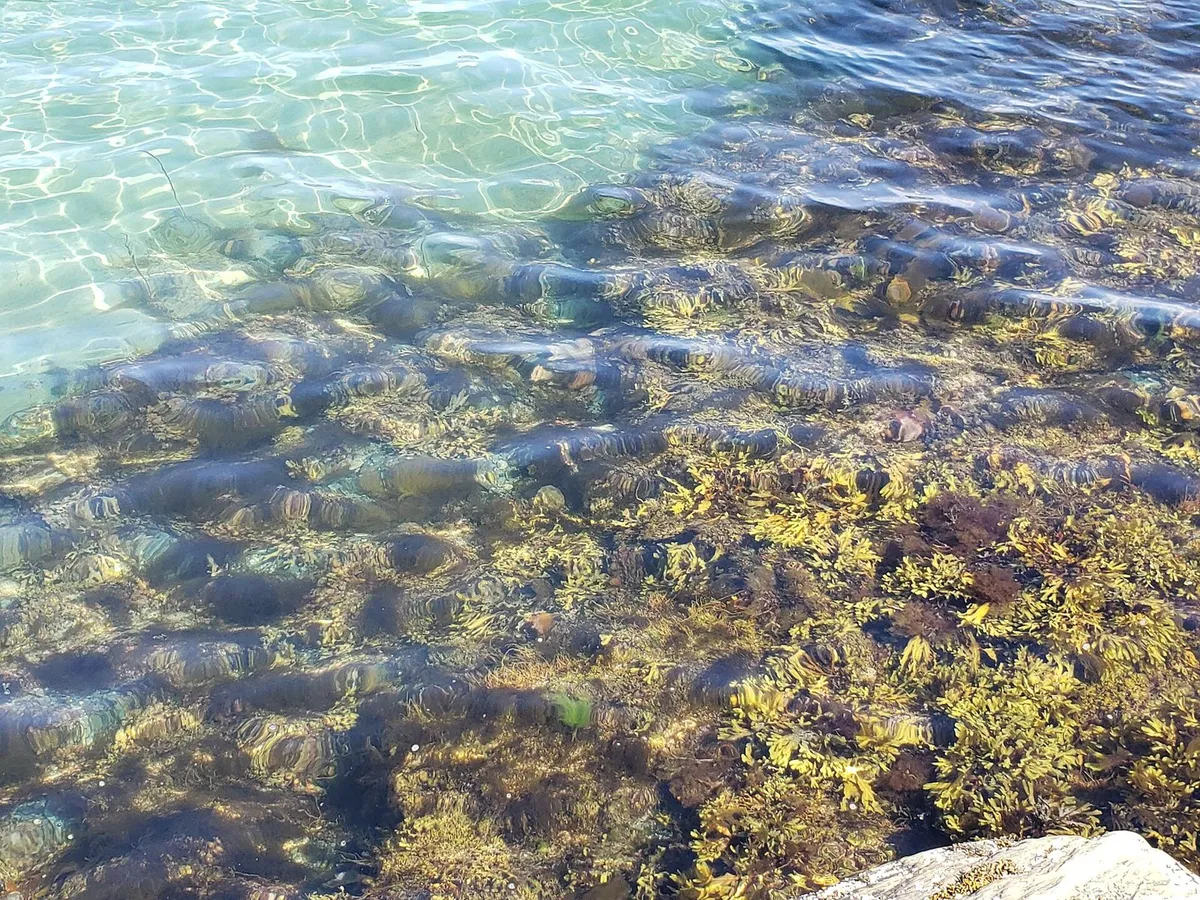
The researchers specifically selected Ulva, a macroalgae variety, for its robust cellular structure, marking the first time this particular seaweed has been utilized in cement production. The team’s methodology involved dehydrating the seaweed before incorporating it into the cement mixture, allowing for higher concentrations than previous studies had achieved.
This innovation addresses a critical environmental challenge, as concrete production currently accounts for 8-11% of global carbon emissions, with cement being the primary contributor to this environmental impact. While various worldwide initiatives are exploring ways to reduce concrete’s carbon footprint through clean energy implementation and alternative binding agents, this
seaweed-based solution offers a unique approach.
The choice of seaweed was strategic, as it naturally captures carbon dioxide during photosynthesis, effectively sequestering it. While smaller algae varieties have been tested before, the team’s use of macroalgae represents a significant advancement in the field.
To accelerate the research process, the scientists developed an innovative machine learning model capable of predicting the cement’s strength development over time. This technological breakthrough eliminated 112 days from the experimental timeline, as traditional cement testing typically requires a 28-day waiting period to assess strength capabilities.
The research team included Meng-Yen Lin and Paul Grandgeorge, who participated as a graduate student and post-doctoral researcher, respectively, in Roumeli’s laboratory. Their collective work builds upon Roumeli’s previous achievements, which include developing a rapidly biodegradable algae-based plastic.
Looking ahead, the research team is focused on creating comprehensive guidelines to assist other scientists in developing environmentally friendly cement mixtures using locally available materials. This framework aims to facilitate the broader adoption of sustainable cement alternatives while maintaining essential performance
requirements.
The collaboration between the academic institution and the technology giant demonstrates the potential for cross-sector partnerships in addressing environmental challenges. By combining materials science expertise with advanced computing capabilities, the team has established a promising pathway for reducing the construction industry’s environmental impact.
The significance of this development extends beyond the immediate carbon reduction achievements. It represents a scalable solution that could potentially transform the construction industry’s approach to sustainable building materials. The success of incorporating biological materials into construction components while maintaining structural integrity opens new possibilities for eco-friendly infrastructure development.
This advancement comes at a crucial time as the construction industry faces increasing pressure to reduce its environmental impact while meeting growing global infrastructure demands. The research team’s achievement demonstrates that it’s possible to address these seemingly competing priorities through innovative materials science and computational approaches.
The study’s success in utilizing machine learning to expedite the development process could have far-reaching implications for future materials science research, potentially accelerating the pace of sustainable innovation across multiple industries.