Revolutionizing Our Cosmic Catalog: The Vera C. Rubin Observatory Unveils Over 11,000 New Asteroids
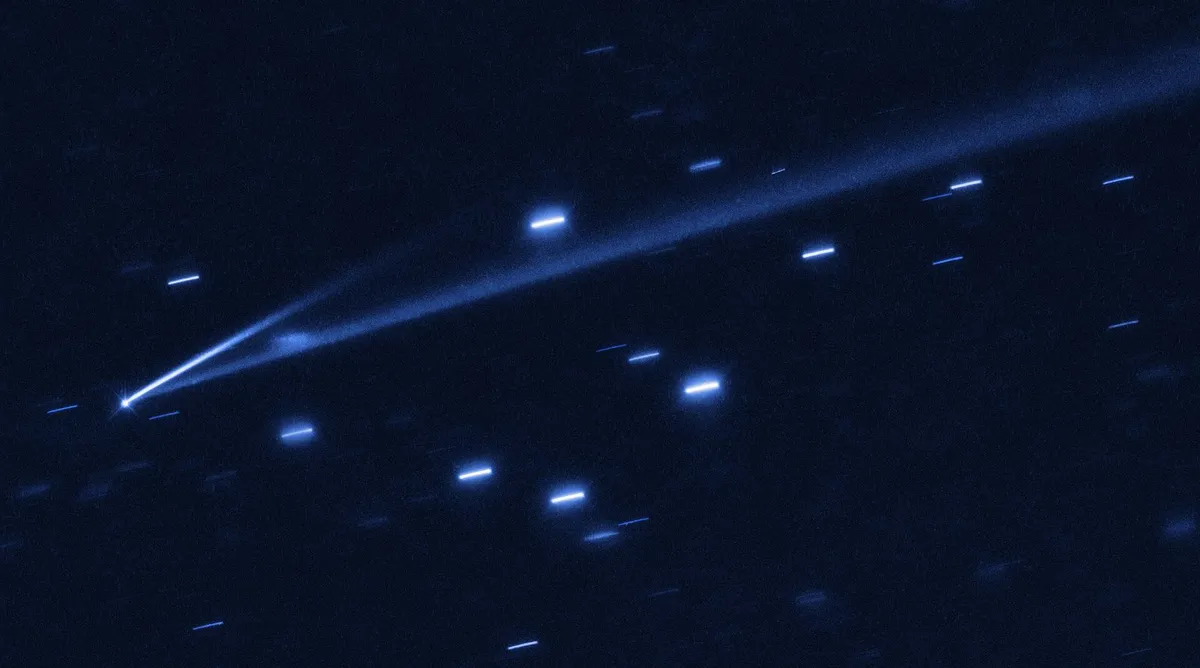
Researchers at the Vera C. Rubin Observatory’s scientific team have identified over 11,000 previously unknown asteroids, thanks to cutting-edge capabilities of the Simonyi Survey Telescope combined with sophisticated data-processing software created by the University of Washington.
The massive haul of new discoveries stems from approximately one million preliminary observations gathered during a six-week period in the summer of 2025. Among the findings are around 380 objects in the trans-Neptunian region and 33 near-Earth objects not previously catalogued. Importantly, none of these newly identified near-Earth objects represents any danger to our planet.
Additionally, the dataset encompasses over 80,000 asteroids that were already known to science, including several that had been considered “lost” due to orbital uncertainties. These discoveries have received official confirmation from the Minor Planet Center of the
International Astronomical Union, which serves as the worldwide repository for data on small bodies within our solar system.
This announcement doesn’t represent the Chilean observatory’s inaugural discoveries. The $800 million facility made its “First Look” premiere in June 2025, and astronomers had already announced the detection of more than 1,500 asteroids during previous testing phases.
According to UW astronomer Mario Jurić, who leads the solar system research team at Rubin, this initial substantial data submission following First Look represents merely the beginning. He emphasized that the observatory has demonstrated its readiness and will accomplish in months what previously required years or even decades. Jurić stated that Rubin is starting to fulfill its promise of fundamentally transforming our catalog of solar system objects and enabling discoveries not yet conceived.
At the heart of the facility sits the Simonyi Survey Telescope, which bears the name of Seattle-area software entrepreneur Charles Simonyi’s family. Outfitted with the planet’s largest digital camera, this instrument can produce 20 terabytes of unprocessed data every night. Scientific institutions globally, including UW’s DiRAC Institute—which stands for Data-Intensive Research in Astrophysics and
Cosmology—analyze and interpret this information.
UW astronomer Ari Heinze, who collaborated with graduate student Jacob Kurlander to develop the asteroid detection software, explained that Rubin’s distinctive observation pattern necessitated an entirely new software framework for identifying asteroids. He confirmed that they successfully built the system and it functions effectively, predicting that this observatory will revolutionize understanding of the asteroid belt.
When operating at full capacity, the Rubin Observatory is projected to identify nearly 90,000 new near-Earth objects within the region surrounding our planet’s orbit. Some of these objects might pose hazards, and early identification would provide scientists, engineers, and policymakers valuable lead time for developing planetary protection strategies.
The trans-Neptunian objects located in the extensive area of the solar system beyond Neptune’s orbit include two frozen bodies that seem to follow highly elongated orbital paths. These two objects—designated 2025 LS2 and 2025 MX348—reportedly reach distances approximately 1,000 times farther from the sun than Earth does, placing them among the 30 most remote known celestial bodies of their type.
Should a large trans-Neptunian object exist in the solar system’s outer regions—a theoretical world referred to as Planet Nine or Planet X—Rubin should have the capability to find it.
Matthew Holman, a senior astrophysicist at the Harvard & Smithsonian Center for Astrophysics and former Minor Planet Center director, compared searching for a trans-Neptunian object to looking for a needle among fields of haystacks. He noted that teaching a computer to examine billions of combinations from millions of fluctuating sky sources and identify those likely to be distant worlds in our solar system demanded innovative algorithmic methods.
Holman partnered with Kevin Napier, a research scientist at the Center for Astrophysics, to create the algorithms for identifying distant solar system objects using Rubin data.
The Rubin discoveries announced thus far merely preview what’s coming during Rubin’s decade-long Legacy Survey of Space and Time.
Simulations indicate that throughout the next ten years, the Rubin Observatory will discover millions of previously undetected asteroids.
Operations of the Vera C. Rubin Observatory receive funding from the U.S. National Science Foundation and the U.S. Department of Energy’s Office of Science.