Seattle Startup Outbound Aerospace Achieves Milestone with Successful Test Flight of STeVE and Secures $1.15 Million in Funding for Future Innovations
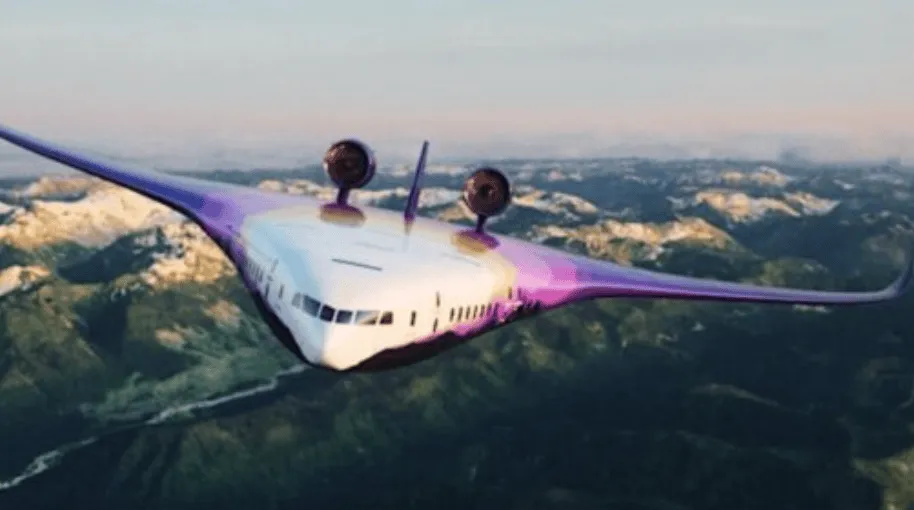
Seattle-based startup Outbound Aerospace has achieved a significant milestone with the successful maiden flight of its prototype aircraft, while simultaneously securing additional funding for its ambitious aviation projects. The company’s demonstrator aircraft, dubbed STeVE (Scaled Test Vehicle), completed its inaugural 16-second flight at Oregon’s Pendleton UAS Range, marking a crucial step forward in the company’s development journey.
The remote-controlled prototype, weighing 300 pounds with a 22-foot wingspan, represents a fraction of the size of Outbound’s ultimate goal – a full-scale passenger aircraft called the Olympic. This achievement comes alongside the company’s successful fundraising efforts, having gathered $1.15 million in pre-seed funding, including $500,000 each from Blue Collective and Antler, plus $150,000 from private investors.
Despite facing initial skepticism from potential investors, Outbound’s team, led by CTO and co-founder Jake Armenta and CEO Ian Lee, has proven their concept’s viability. The company now employs five full-time staff members and works with approximately six contractors, demonstrating steady growth in its operations.
The successful test flight validates Outbound’s innovative 3D-printing fabrication process for carbon-fiber aircraft construction. The company has developed three distinct methods for carbon fiber construction, with two showing particular promise for scalable production. Their approach utilizes large, 3D-printed molds and tools, which significantly reduces production and lead times.
Looking ahead, Outbound is already planning its next phase of development with a larger aircraft that will double STeVE’s wingspan. Unlike the current electric-powered prototype, the upcoming aircraft will feature turboprop propulsion and could serve as a prototype for a 19-seat business jet. While STeVE was fabricated in Dallas and integrated in Arlington, Washington, the next aircraft is expected to be entirely constructed in the Seattle area, with an estimated 18-month development timeline.
The company’s long-term vision includes the development of the Olympic, a blended-wing airliner with a 171-foot wingspan, capable of carrying between 200 and 250 passengers – positioning it in the same category as the Boeing 757. This ambitious goal is supported by Outbound’s proprietary manufacturing technology, which the company believes gives them a unique advantage in producing large-scale carbon fiber structures.
Armenta, expressing enthusiasm about his team’s capabilities, emphasizes that their manufacturing technology sets them apart in the industry, particularly in their ability to consistently produce substantial carbon fiber structures. The successful test flight has helped silence early skeptics who doubted the startup’s ability to enter the challenging aerospace manufacturing sector.
The prototype’s development, which took nine months to complete, has provided valuable insights for the company’s future projects. Despite the brief duration of the initial flight, it represented a crucial proof of concept for Outbound’s manufacturing methods and design approach.
The achievement marks a turning point for Outbound Aerospace, transforming it from a concept that once drew skepticism to a demonstrably viable venture in the aerospace industry. With its innovative manufacturing processes and successful first flight under its belt, the company is positioned to pursue its larger ambitions in aircraft development, aiming to revolutionize how commercial aircraft are manufactured and designed.